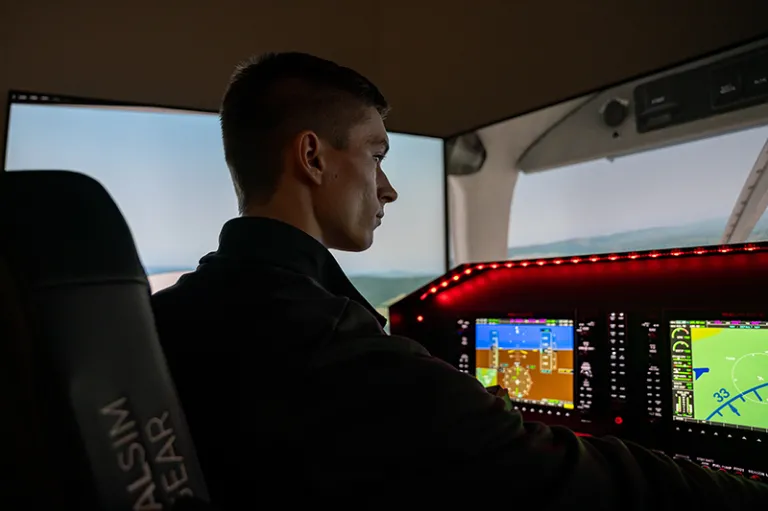
How to Become a Pilot at an FAA-Approved Flight School
Published Blog Post
Have you ever considered turning your interest in aviation into a career? Becoming a pilot takes dedication, training, and a commitment to safety, but the path can be more straightforward than you might think. Whether you want to fly for a major airline, operate private aircraft, or explore other opportunities in aviation, understanding how to become a pilot is the first step.
For students considering a future in aviation, choosing the right flight training program can make a significant difference. An FAA-approved flight school provides structured instruction and hands-on experience to help students work toward their pilot certifications while developing the knowledge and skills needed for a career in the industry.
At Marywood University, students can combine professional flight training with a Bachelor of Business Administration (BBA) in Aviation Management, bringing together flying experience and an understanding of the aviation industry.
How to Become a Pilot: Understanding the First Steps
Becoming a pilot involves completing the appropriate certifications and ratings based on your career goals. Many aspiring professional pilots begin with a Private Pilot Certificate before advancing to additional training, such as an instrument rating and commercial pilot certificate.
Training combines ground instruction, which covers aviation regulations, weather, navigation, and aircraft systems, with hands-on flight experience alongside a qualified instructor. The timeline varies based on the type of certification, training schedule, and individual progress.
Understanding FAA Pilot Requirements
The Federal Aviation Administration (FAA) establishes the requirements pilots must meet to earn and maintain their certificates. While requirements vary depending on the type of certification, students pursuing a private pilot certificate must meet several basic qualifications.
For an airplane private pilot certificate, applicants must be at least 17 years old, be able to read, speak, write, and understand English, and meet the applicable medical certification requirements. They must also complete the required ground instruction and flight experience, pass the FAA knowledge test, and demonstrate their flying skills during a practical examination with an FAA examiner.
The minimum flight experience required depends on the type of flight school and training program. Under Federal Aviation Regulations Part 61, applicants generally need at least 40 hours of flight time for a private pilot certificate. Students training through an FAA-approved Part 141 program may qualify with a minimum of 35 hours, although additional flight time may be necessary to demonstrate proficiency.
These are the basic requirements for earning a private pilot certificate. Students pursuing professional aviation careers will need additional certifications, ratings, flight experience, and medical qualifications.
Understanding FAA pilot requirements early can help prospective students make informed decisions about their training and the flight school they choose.
What Is the Difference Between an FAA-Approved Flight School and Other Flight Training Programs?
When researching how to become a pilot, prospective students may come across flight schools that operate under different FAA regulations. Two common training pathways are Part 61 and Part 141.
An FAA-approved Part 141 flight school follows a structured training curriculum that meets FAA standards for instruction, facilities, aircraft, and personnel. These programs provide an organized approach to pilot training, with established lesson plans and progress evaluations.
Part 61 flight training offers a different approach, allowing instructors and students more flexibility in how training is structured. Both pathways can lead to pilot certification, but the training environment and minimum flight-hour requirements differ.
When comparing flight schools, students should consider the quality of instruction, available aircraft, training facilities, scheduling options, and opportunities to gain practical experience. Finding a program that fits their learning style and career goals is an important part of preparing for a future in aviation.
Do You Need a Degree to Become a Pilot?
One of the most common questions prospective pilots ask is whether they need a college degree to become a pilot.
The short answer is no. The FAA does not require a college degree to earn a private or commercial pilot certificate. Instead, pilots must meet the applicable certification, training, testing, and flight experience requirements.
However, earning a college degree can provide additional career preparation and opportunities beyond flight training alone.
A degree in aviation management, for example, combines pilot training with an understanding of the business and operational side of the aviation industry. Students can develop knowledge of airline operations, airport management, business practices, and the broader aviation environment while working toward their flight certifications.
For students who want to keep multiple career paths open, this combination can be especially valuable. A college education can prepare graduates for opportunities in the cockpit as well as other areas of the aviation industry.
How Marywood University Combines a College Degree With Pilot Training
At Marywood University, students interested in becoming pilots can pursue a Bachelor of Business Administration in Aviation Management with a Pilot/Flight Operations focus.
The program combines business coursework with professional flight training through an FAA-approved Part 141 flight school. Students train with FlyGATEWAY at Wilkes-Barre/Scranton International Airport, gaining hands-on experience while completing their degree.
Rather than focusing exclusively on flying, Marywood's Aviation Management program introduces students to the broader aviation industry. This combination allows students to develop practical flying skills while exploring the business and operational aspects of aviation.
As part of their training, students have the opportunity to work toward FAA certifications and ratings, including a Private Pilot Certificate, Instrument Rating, Commercial Pilot Certificate, and Certified Flight Instructor certification.
Flight training is an important part of the program, giving students the opportunity to apply classroom knowledge in a real-world aviation environment while progressing toward their professional goals.
Students interested in learning more about opportunities in the aviation industry can also read Looming Pilot Shortage an Opportunity for Aspiring Aviation Students.
Start Your Journey Toward Becoming a Pilot
Becoming a pilot requires commitment, preparation, and hands-on experience. From meeting FAA pilot requirements to completing flight training and earning additional certifications, each stage helps prepare students for the responsibilities of flying.
Choosing a college program that combines professional pilot training with a degree can also help students develop skills that extend beyond the cockpit.
At Marywood University, students can pursue their interest in aviation while earning a business degree and gaining practical flight experience. If you're ready to explore how to become a pilot and learn more about a future in aviation, discover Marywood's Aviation Management program.
Your future in aviation starts with taking the first step.
More Marywood News and Blogs
No news stories or blog posts match your filters in this widget.
-
 How to Become a Pilot at an FAA-Approved Flight School Blog Post
For students considering a future in aviation, choosing the right flight training program can make a significant difference. An FAA-approved flight school provides structured instruction and hands-on experience to help students work toward their pilot certifications while developing the knowledge and skills needed for a career in the industry.
-
 What Happens During Your First Clinical Rotation in Nursing School? Blog Post
Your first clinical rotation is an opportunity to observe healthcare professionals, interact with patients, practice basic nursing skills, and learn what it takes to provide quality patient care. You won't be expected to know everything on your first day.
-
 Merry & Bright at Marywood University News Story
Join us for a joyful tradition that features multiple ways to celebrate the season through festive programming, prayer, and community service opportunities.